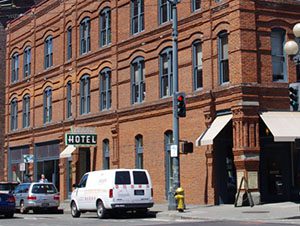
Every May, Building Safety Month, led by the International Code Council, highlights the people, practices, and policies that keep our communities safe. In Seattle, one of the most important building safety efforts underway is reducing the risk posed by unreinforced masonry (URM) buildings, older brick structures that can collapse during earthquakes when they haven’t been retrofitted.
At the Seattle Department of Construction and Inspections (SDCI), we’re continuing to improve tools that help the public better understand this risk and the progress being made. One of those tools is the Seattle URM Database, a publicly accessible resource that allows you to look up buildings across the city and see whether they’ve been retrofitted.
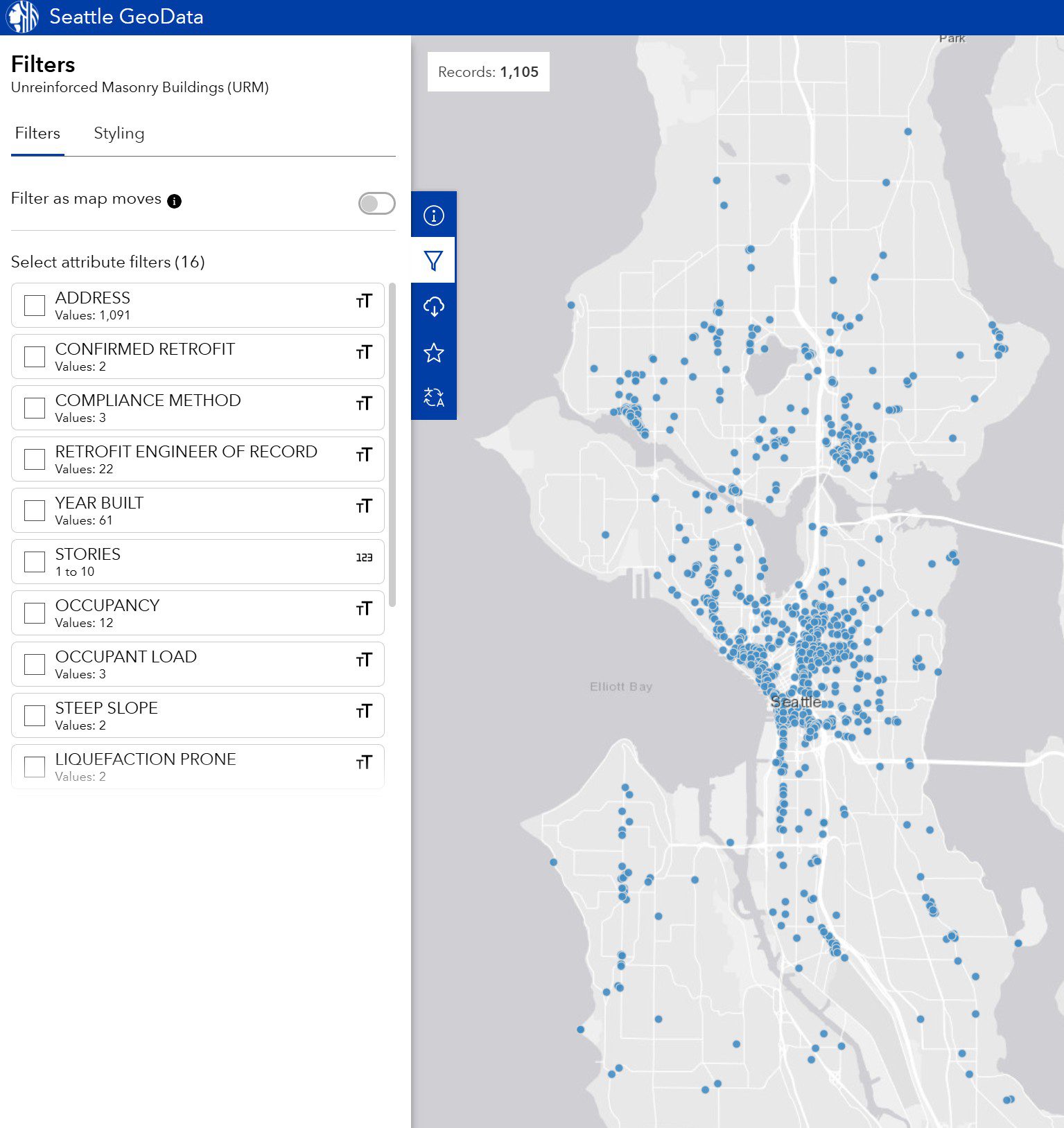
The URM database is designed to answer a simple but important question: Is the building I live in, work in, or walk past earthquake-ready?
With just a few clicks, users can:
- Search by address or neighborhood
- Identify URM buildings
- See whether a building has completed a seismic retrofit
Building safety starts with awareness of vulnerability. When people understand their risk, they are better equipped to take action, whether that’s learning more about their building, talking with a property owner, or supporting policies that make retrofits more achievable.
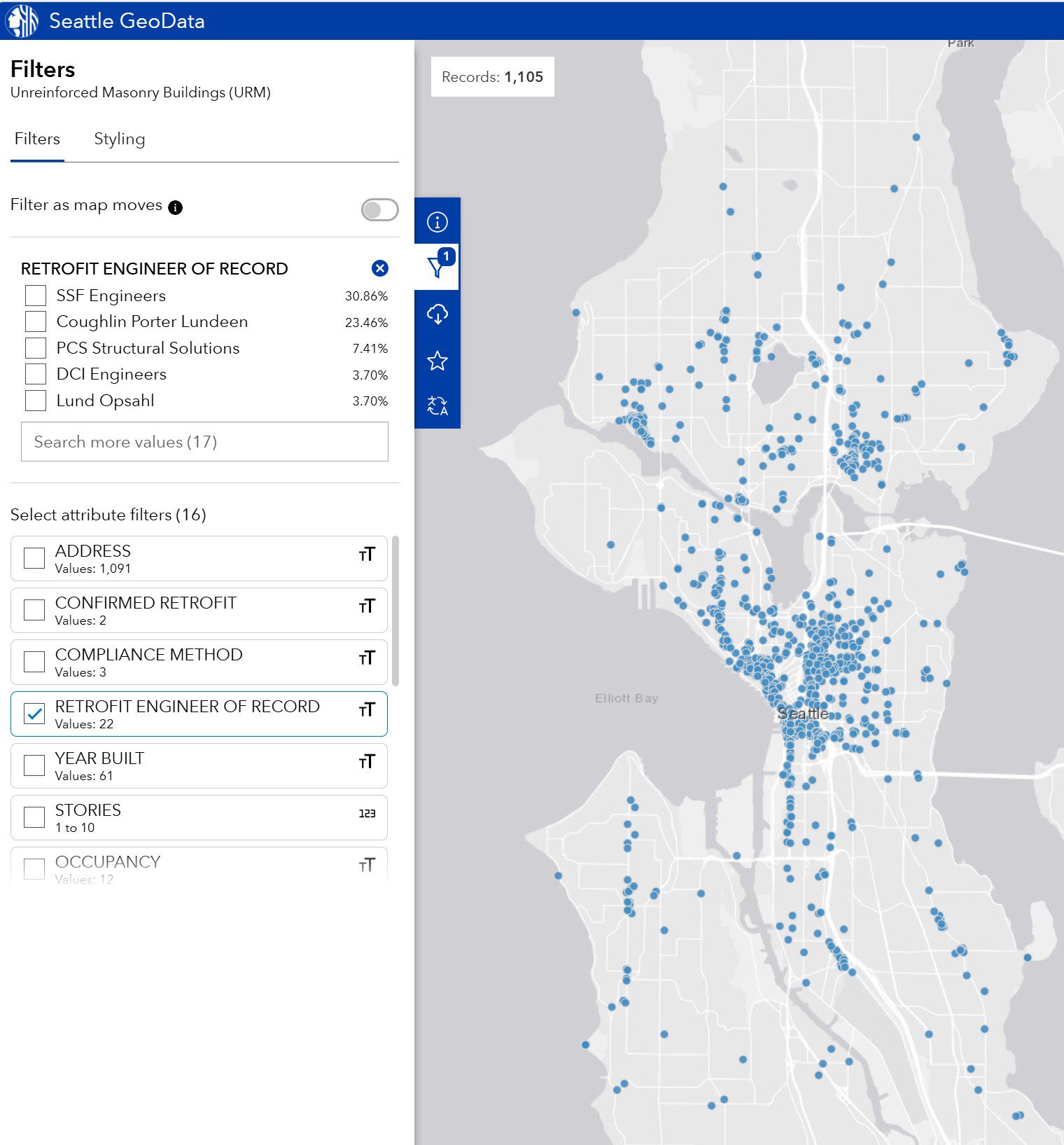
As part of our ongoing improvements to the URM Database, SDCI has added a new data field “Retrofit Engineer of Record,” identifying engineering firms that have completed compliant retrofit projects.
While the City cannot recommend or endorse specific contractors or firms, we can identify those that have completed code-compliant retrofit projects. This information can help URM owners find firms experienced with the City’s retrofit compliance requirements.
If you think your building has been seismically retrofitted and the status in the URM database is not reflected as such, you can learn about the Procedure to Apply for Retrofitted URM Status in the URM Database.
Retrofitted URM buildings are significantly less likely to experience life-threatening failures in an earthquake.But many buildings have not yet been upgraded, which is why tools like the URM database are so important. They help track progress, increase awareness, and support informed decision-making.