July Publication Updates
August 1, 2022
We updated several Tips for code updates and current online service options.
We updated several Tips for code updates and current online service options.
The City Council recently passed Council Bill 120207 requiring 1) tree service providers to register with the City prior to conducting commercial tree work and consulting on private property and 2) public notice to be posted on-site prior to any tree work beyond routine maintenance.
Seattle City Light (SCL) recently developed a new electric metering standard to clarify discrepancies and ensure consistent interpretation related to placement of equipment (e.g., cable boxes, downspouts, etc.) within the defined electric meter working space.
Reminder: On December 15, 2021, Mayor Durkan signed Ordinance 126509, which changes the name of “Single Family” zones to “Neighborhood Residential” zones.
These Tips have been updated to change single-family zones and to neighborhood residential zone.
In response to the COVID-19 pandemic, SDCI closed the in-person Applicant Services Center (ASC). SDCI has been working to offer new and better ways to connect customers with SDCI expert staff for conversations they’ve missed during the pandemic. We are excited to announce that we have launched a Virtual Applicant Services Center (Virtual ASC). You can now receive responses to your questions without coming to downtown Seattle. In the future, we will be offering targeted in-person service on the 4th floor of the Seattle Municipal Tower to serve customers who need assistance with accessing our online services or who need to pay fees in cash.
On December 15, 2021, Mayor Durkan signed Ordinance 126509, which changes the name of “Single Family” zones to “Neighborhood Residential” zones. Seattle’s Land Use Code and the official zoning maps divide the city geographically into zoning districts (e.g., single-family residential, multifamily residential, commercial, industrial, etc.). Ordinance 126509 applies the new zone name by dividing the neighborhood residential areas into four zones, based on pre-existing minimum required lot sizes: Single-family 9600 (SF 9600), Single-family 7200 (SF 7200), Single-family 5000 (SF 5000), and Residential Small Lot (RSL).
On May 12, SDCI launched a new feature in the Seattle Services Portal that allows applicants to renew their boiler, conveyance, and refrigeration permits 30 days before their 18-month issuance period expires. Prior to this new feature, our customers had to call or email SDCI staff to initiate a manual renewal process that could take multiple phone calls or emails to complete. Now, applicants can simply sign in to their portal account and renew their permit in a few clicks.
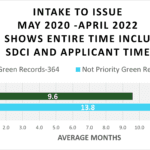
Priority Green Expedited offers faster building permit review and processing for new construction projects. We do this by prioritizing your application for initial and corrected plan review. Additionally, we give you a contact person to help you solve problems during the review process, provide permit status updates, and answer questions. We recently evaluated data for the last two years to find out if Priority Green Expedited met the program goals during these unprecedented and difficult times. Our evaluation found that we issued Priority Green projects over 4 months faster than non-Priority Green projects.
When a liner is installed in a private side sewer, it is the contractor’s responsibility not to extend the liner into the city sewer mainline or leave any related equipment or debris in the mainline. If the contractor suspects that the liner does extend into the mainline or any equipment and/or related debris has entered the mainline, SPU requests that the contractor contact the SDCI site inspector immediately.